Blog · 18 Jul 2026
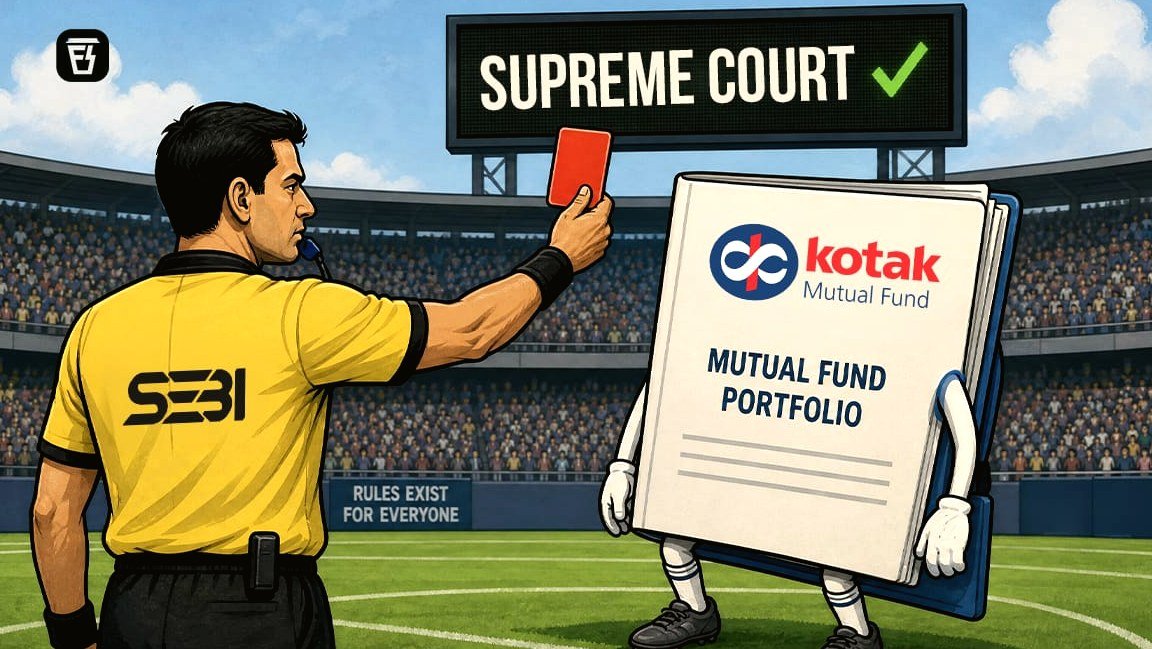
Why the Supreme Court sided with market regulator against Kotak AMC
In today’s Finshots, we explain why the Supreme Court upheld a SEBI order against Kotak AMC.But here’s a quick sidenote before we begin.
In today’s Finshots, we explain why the Supreme Court upheld a SEBI order against Kotak AMC.But here’s a quick sidenote before we begin.
We’re hosting a free 2-day Insurance Masterclass that helps you build real financial security by understanding health and life insurance the right way.📅 Tomorrow (Saturday), 18th July at 11:00 AM: Life Insurance How to protect your family, choose the right cover amount, and understand what truly matters during a claim.📅 Sunday, 19th July at 11:00 AM: Health Insurance How hospitals process claims, common deductions, the mistakes buyers usually make, and how to choose a policy that won’t disappoint you when you need it most.👉🏽 Click here to register while seats last.Now onto today’s story.The StoryThis week, the Supreme Court upheld a ₹2.1 crore penalty imposed on Kotak Mahindra Asset Management Company (AMC) and its trustee company, Kotak Mahindra Trustee Company (which oversees whether the AMC complies with SEBI regulations and acts in the best interests of investors). The penalty itself isn’t huge, but the judgment settles an important question.Can an asset manager break mutual fund rules if doing so ultimately protects investors?Well, the apex court’s answer was a clear no. And to understand why, we’ll have to go back to between 2013 and 2016, when Kotak AMC launched six close-ended Fixed Maturity Plans (FMPs).For the uninitiated, FMP is similar to a bank fixed deposit, except that it’s structured as a debt mutual fund. You can invest only during the fund’s initial offer period.
After that, the fund closes for fresh investments, which is why it’s labelled “close-ended”.The AMC then takes this money and invests it in debt securities issued by governments or companies, making sure that these securities mature on or before the FMP itself. And at the end of the scheme’s tenure, investors receive their money back along with whatever returns those debt investments have generated. Unlike…